

THE PERFORMANCE SOCIETY: JOURNALISTS, ACTIVISTS, INFLUENCERS
The end of truth: your reality is a bubble.
Every morning you open a screen. The algorithm serves you the world — not the world, but your world. News that confirms what you already think. Videos that reinforce what you already believe. Posts that reflect who you’ve already decided you are. Instagram feeds you filtered beauty. TikTok entertains you with truth pre-chewed in 60 seconds. X throws you into the culture war you chose. LinkedIn sells you the theatre of productivity.
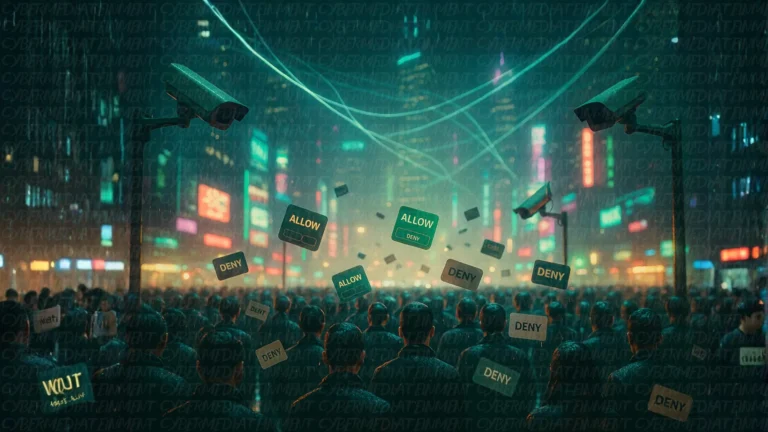
Platforms are no longer social networks. They are totalizing ecosystems. Parallel universes where each tribe consumes its own version of reality, breathes its own air, speaks its own language. We are no longer citizens of a shared society debating common facts. We’re residents of sealed bubbles, watching each other with suspicion through algorithmic walls.
Algorithmic conformism has never been this absolute. Polarization has never been this extreme. And at the center of this collapse — between tribal truths and perception wars — something we thought immortal is dying: journalism as we knew it.
ANATOMY OF THE BUBBLE: MEDIAPOLIS AND FRACTURED TRUTH
Roger Silverstone, in Why Study the Media?, describes a “mediapolis”: a global community that lives in a shared media space, an environment where different cultures encounter each other and negotiate common meaning. A kind of Tower of Babel where, even though we are immersed in information, we’ve stopped being able to understand and listen to each other.
To understand the structural importance of communication networks, Manuel Castells shows that power today no longer lies in the control of production or violence, but in the control of communication networks — in the platforms where meaning is constructed.
In traditional journalism, symbolic capital — credibility, authority — accumulated through specific practices: source verification, separation of fact and opinion, institutional accountability. The field had rules. If you violated them, you lost symbolic capital.
But in fragmented digital fields, symbolic capital works differently. It’s not accumulated through verification, but through resonance. Not through accuracy, but through perceived authenticity. An influencer with 5 million followers who openly says “I’m not an expert, I’m just sharing my truth” has more symbolic capital — more power to shape opinion — than a Times journalist with 30 years of experience.
The field has inverted. The very rules that once produced authority are now a handicap.
THE EPISTEMOLOGY OF ENTERTAINMENT
In 1985, Neil Postman published Amusing Ourselves to Death. His thesis was simple: television wasn’t just corrupting the content of information, it was corrupting epistemology itself — the way we know what we know.
Postman argued that each medium privileges certain kinds of content and certain modes of understanding. Print favors sequential argument, complex reasoning, reflection. Television favors image, immediate emotion, fragments.
The problem wasn’t that TV sometimes aired trivial content. The problem was that it turned everything into entertainment. The news. Politics. Public debate. Not because producers were cynical, but because the medium demanded it: immediacy, visual impact, dramatization, narrative closure.
The line between “serious” and “entertainment” collapsed. And with it collapsed the very possibility of rational, evidence-based debate.
Postman was describing TV. But he predicted TikTok.
Today the issue isn’t just that everything becomes entertainment. It’s that everything becomes engagement optimization. The algorithm has no ideological preference. It has one metric: how long you stay on the platform.
Neuroscience is clear: the human brain responds most intensely to novelty, strong emotion, identity confirmation. Not to verified truth, complex argumentation, nuance, doubt.
The medium — the algorithm — has an epistemology. And that epistemology is incompatible with traditional journalism.
LOST AUTONOMY: JOURNALISTS AS INFLUENCERS
Jill Abramson, executive editor of the New York Times during one of the most turbulent transitions in journalism, documents in Merchants of Truth an ontological mutation: journalism’s transformation from civic institution into identity product.
The original contract was clear. 20th-century journalism had a mandate: be a watchdog over power, act as an information gatekeeper, build public consensus around verified facts. Newspapers were businesses with a mission that went beyond profit. There was a sacred firewall — physical, symbolic, inviolable — between the newsroom and advertising.
Abramson recalls when a top Times editor could refuse to even meet an ad executive on the newsroom floor. The physical separation embodied the ethical separation: reporting truth vs. selling access to attention.
This embodied what Bourdieu called “field autonomy”: the ability of a social field to define its own criteria of value independently of economic or political logic. Journalism could afford not to publish a story because “it’s not verified enough,” even if it would have sold millions of copies.
The economic model sustained that separation. Stable subscriptions plus broad advertising created predictable revenue. Readers paid for institutional credibility. The slowness of the production cycle — one edition per day — allowed rigorous fact-checking, multilayer editing, structural accountability.
THE INVASION: FROM TRUTH TO ENGAGEMENT — JOURNALISTS AS INFLUENCERS
BuzzFeed and VICE arrived like heretics.
Jonah Peretti, founder of BuzzFeed, didn’t see the web as an “information repository.” He saw it as an “aggregator of human emotion.” For him, the internet was sentimental, not rational. BuzzFeed wasn’t a news site — it was a technology company using data to map what makes people vibrate emotionally, then producing content optimized for that vibration.
The shift was radical: from truth to engagement as the supreme metric.
This was what Castells called the shift from “the power of identity” to “the identity of power.” No longer: who you are determines the power you have. Instead: the network you control determines who you can become. BuzzFeed didn’t build authority through institutional credentials, but through virality. Power didn’t flow top-down, it propagated laterally through the network.
BuzzFeed started with listicles and quizzes. Behind that childish surface: lethal technical sophistication. Obsessive A/B testing. Real-time analytics. Deep understanding of virality mechanics. Peretti had mapped the “Bored at Work Network” — the ecosystem of office procrastination.
Then the twist: with money from “Which Harry Potter character are you?” quizzes, Peretti hired investigative journalists. Result: a 2021 Pulitzer Prize for an investigation into Xinjiang re-education camps.
The paradox was complete: the company born from denying traditional journalism produced journalism better than many legacy outlets.
But field autonomy was gone. Now engagement economics determined what could exist. Investigative reporting survived only as a byproduct of virality. Subordinate. Parasitic.
SURVEILLANCE CAPITALISM: MONETIZING EXPERIENCE
Shoshana Zuboff, in The Age of Surveillance Capitalism, theorizes a new economic order that claims human experience as free raw material for extraction, prediction, and sale.
Digital platforms don’t sell content. They sell behavioral predictions.
It works like this:
Extraction: every click, scroll, pause, like is recorded. Not just what you click, but how. Scroll velocity. Hesitation time. Attention patterns. Facial expression. Vocal tone.
Predictive analysis: machine learning ingests this data to create behavioral models. It doesn’t “know you” as an individual. It knows you as a statistical pattern. But that pattern predicts, with growing accuracy, what you will do, buy, believe, vote.
Commodification: those predictions are sold. Not to you. To advertisers, marketers, political campaigns. The product is not “you.” The product is the capability to modify your future behavior.
Zuboff calls this “behavioral surplus.” Platforms extract data far beyond what’s needed to provide the service, then use that surplus to create predictive products sold to third parties.
Result: your feed is not designed to inform you. It’s designed to modify you.
It doesn’t show you what’s true. It shows you what keeps you on the platform. What makes you more predictable.
This explains why polarizing, emotionally extreme, tribally-coded content dominates feeds. Not because platforms have an ideological agenda. But because that kind of content produces stronger, more monetizable behavioral patterns. Polarized users are more profiled, more sellable.
This logic connects directly to Postman’s analysis: when the epistemology of the medium (algorithmic engagement maximization) fuses with the economics of behavioral extraction (surveillance capitalism), the outcome is inevitable. Traditional journalism — slow, expensive, verified, truth-oriented — is structurally disadvantaged.
TRUTH AND VISIBILITY: WHEN THE FORTRESSES CRUMBLE
Abramson documents how the New York Times and the Washington Post — fortresses of objective journalism — reshaped their own nature to survive.
New York Times, Trump era: subscriptions explode. But not because of “objective reporting.” Because of identity resistance. The implicit slogan becomes: read the Times because you share our anti-Trump values. The editorial tone hardens — more adversarial, emotionally charged. The paper builds a community around a declared stance.
This is what Bourdieu calls “field heteronomy”: when a field’s internal logic becomes subordinated to external logics. The Times had to choose: maintain autonomy and die economically, or embrace heteronomy and live.
It chose survival.
Abramson captures the dilemma: “The dispassionate distance that some readers, especially older ones, believed had given national brands their authority was eroding.”
The Times no longer reports neutral facts. It reports facts with perspective, builds a tribe around that perspective. And this works under the subscription model because people aren’t looking for information to form opinions — they’re looking for information that confirms opinions they’ve already formed.
To survive, legacy media had to become emotional brands. And in doing so, they betrayed the neutrality mandate that once gave them authority.
This confirms Castells’ theory of “mass self-communication”: in the network society, old gatekeepers only survive by becoming particularly powerful nodes in the network.

THE POST-INTERMEDIATION OF TRUTH
Here we bring in the crucial contribution of Fausto Colombo, who in 2017 theorized the concept of the “post-intermediation of truth” (The Post-Intermediation of Truth: Newsmaking from Media Companies to Platform).
Colombo, an Italian media sociologist who recently passed away (1955–2025), dedicated his career to studying digitalization and its social effects. His work mapped the shift from a system in which media institutions acted as intermediaries — verifying, contextualizing, ranking information — to a system in which digital platforms dismantled that intermediation without replacing it with anything equivalent.
Post-intermediation does not mean “no mediation.” It means mediation is now executed by proprietary algorithms that follow not journalistic criteria but engagement criteria. Platforms don’t verify truth — they curate visibility. They don’t rank by public importance — they rank by probability of interaction.
In Media Ecology: Manifesto for a Gentle Communication (2020), Colombo extends this analysis with a powerful metaphor: informational pollution. Just as industrial waste pollutes physical environments, false, polarizing, toxic content pollutes our “media ecosystem” — the symbolic environment through which we understand the world.
This polluted ecosystem produces what Colombo calls “post-truth”: not simply fake news, but a specific mode of producing and circulating information where the line between true and false becomes irrelevant. What matters is virality, emotional impact, engagement potential.
THE AGE OF THE JOURNALIST-INFLUENCER
The category “journalist” has shattered.
Johnny Harris: 3.6M YouTube subscribers. Ex-Vox, now fully independent. Produces geopolitics video essays with Netflix-documentary production value. Average budget: $50K per video. Team of ~10. Sponsorship pull: $100K+ per video. No external editor. No institutional fact-checker. He is simultaneously researcher, writer, narrator, editor, publisher.
The millionaire Substackers: Matt Taibbi, Glenn Greenwald, Bari Weiss. Thousands of paid subscribers at $5–10/month. They publish when they want, with no editorial filter. They are journalists, columnists, media companies.
Joe Rogan: 11M+ listeners per episode. Spotify deal north of $200M. Each 2–3 hour unedited conversation reaches more people than any traditional TV talk show. He invites scientists, politicians, comedians, controversial figures. There’s no real-time fact-check. He doesn’t pretend neutrality. He admits ignorance, changes his mind, issues “corrections” in later episodes.
TikTok News Creators: teenagers with 5M+ followers. They “explain” wars, economics, politics in 60 seconds. Format: forced simplification, high-tempo visuals. Gen Z gets news this way. They don’t read 2,000-word articles. They consume micro-dose video info.
These creators are Postman’s prophecy made flesh: information is now indistinguishable from entertainment. Not because creators are shallow, but because the medium demands it.
A 20-minute YouTube video on geopolitics must: hook in the first 3 seconds, maintain constant visual rhythm, layer music and animated graphics, compress complexity into digestible narrative, deliver emotional and narrative closure.
These are not creative flourishes. They are algorithmic requirements. If you don’t meet them, the algorithm won’t surface you. And if the algorithm doesn’t surface you, you don’t exist.
- Reuters Institute Digital News Report 2024: 55% of under-35s in Western countries get their news primarily through social media
- TikTok is Gen Z’s #2 news source after Google
- A 50M-view TikTok reaches more people than a full month of New York Times front pages
- Top YouTube creators earn $50K–$500K per sponsored video — more than a traditional senior journalist’s yearly salary
TRUTH VS INFORMATION: THE AUTHENTICITY PARADOX
Silverstone argued that all mediated communication is mediation: someone selects, filters, frames reality according to certain criteria. Mediation is inevitable. The question is: which criteria, controlled by whom?
In traditional journalism, mediation was visible and institutional. You knew there was an editor, a fact-checker, an editorial line. Mediation was declared.
In creator content, mediation is invisible and individualized. The creator appears to show you unfiltered reality. But that “authenticity” is engineered: carefully chosen frames, strategically edited moments, persona calibrated for appeal, content tuned for algorithmic preference.
Mediation becomes more powerful precisely because you don’t perceive it. And you don’t question it, because you feel a personal bond with the creator.
Silverstone called this “proper distance”: the necessary distance media should maintain — close enough to emotionally engage us, distant enough to allow critical judgment.
Creator media collapses that distance. You feel like the creator is your friend. And you don’t interrogate friends the way you interrogate institutions.
At the same time: zero institutional accountability. No editor. No legal review. No fact-check desk. Errors might get a “correction” in the next upload. There are no real professional consequences.
Many creators are more transparent than traditional outlets. They don’t fake neutrality. They declare bias. They show process. They correct themselves publicly. They interact directly with the audience, without PR filters.
This perceived authenticity is an even stronger form of mediation. And it raises the question: is radical personal transparency without accountability better than institutional accountability with opacity?
THE INVASION OF FAKE REALITY
While traditional journalism collapses and influencers take the information space, an even more radical threat is emerging: the disintegration of the very concept of “evidence.”
For centuries, journalism rested on a simple epistemology: evidence exists. Photos, videos, documents, testimony. The journalist’s job was to verify, contextualize, present.
That certainty is dead.
November 2023: a video circulates of Zelensky announcing Ukraine’s surrender. Perfect voice. Perfect lip sync. It’s a deepfake. Before it’s debunked, millions see it.
March 2024: an image of Trump being arrested by NYPD goes viral. Immaculate detail. Generated by Midjourney. The arrest never happened.
June 2024: deepfake audio of Biden using racist slurs spreads on X. Algorithms boost it because outrage drives engagement. By the time fact-checkers respond, the damage is already done.
September 2024: TikTok creators share “leaked” government surveillance documents. The files were generated by GPT-4 with sophisticated prompt engineering. Fonts correct. Bureaucratic wording perfect. Layout plausible. Entirely fake.
We’ve entered what Zuboff would call the “extractive phase of simulation”: platforms have harvested so much behavioral data that they can now generate simulations indistinguishable from reality. Not just predict human behavior — synthesize it.
The technology of deception is democratized. You no longer need a studio budget. You need a laptop and a 20-minute YouTube tutorial.
GPT-4, Claude, Gemini: they generate texts indistinguishable from human reporting. They can generate “news articles” — neutral tone, plausible quotes, coherent narrative structure — in seconds. They can spin whole interlinked fake-news ecosystems, each source reinforcing the others, building a self-validating disinformation mesh.
We’re entering an era where nothing is verifiable with certainty. Any photo could be fake. Any video could be manipulated. Any audio could be synthesized. Any document could be generated. And the expert-level ability to tell the difference is evaporating.
THE ECONOMY OF THE LIE
There’s a reason fake news and deepfakes proliferate: they work. And they work because surveillance capitalism rewards them.
Social platform algorithms are optimized for one thing: engagement. Not accuracy. Not truth. Not social benefit. Just: how long you stay. How many clicks. How many shares. How many comments.
Research is unequivocal: fake news outperforms verified reporting.
MIT study, 2018: false stories spread 6 times faster than true ones on Twitter. They reach more people and trigger more interaction. Why? Because they’re optimized for emotion. Shock. Outrage. Fear. Rage.
This confirms Zuboff’s point: surveillance capitalism doesn’t prefer true or false. It prefers predictable and profitable.
True stories are often complex. Nuanced. Context-heavy. False stories are simple. Absolute. Bias-confirming. They generate stronger, more monetizable behavior patterns.
The algorithm rewards the lie not for ideological reasons, but for systemic ones.
And this creates a perverse economy:
Content farms in Macedonia, the Philippines, Romania: mass-producing engagement bait. Revenue through programmatic ads. A viral article can bring in $10K–$50K. Zero verification cost.
Disinformation influencers: accounts with millions of followers systematically pushing unverified claims. They monetize through sponsorships, online courses, affiliate links. Example: Alex Jones made $50M+/year selling supplements to his audience. The content — conspiracy narrative — was just the funnel.
State actors: Russia, China, Iran deploy fake news as geopolitical weapons. Production cost: minimal. Impact: destabilize democracies, sway elections, seed distrust. ROI: massive.
Now compare that to verified journalism:
The New York Times: spends millions on an investigation. Months of work. Teams of fact-checkers. Legal review. Best case scenario: hundreds of thousands of readers.
Viral fake story: made in hours. Zero verification. Tens of millions of impressions. Immediate revenue.
In an attention market governed by surveillance capitalism, serious journalism is structurally disadvantaged.
Zuboff again: “Surveillance capitalism unilaterally claims human experience as free raw material.” When human experience is raw material, what matters is not the quality of the experience but the efficiency of extraction.
Truth is expensive to produce. Lies are cheap. The market optimizes for efficiency.
INFORMATION DESERTIFICATION: THE END OF TRUTH
While influencers and disinformation scale, traditional journalism is undergoing mass extinction.
USA, 2005–2024: 2,900+ newspapers closed or merged. Whole regions now have no local news coverage — “news deserts.”
Newsroom jobs: down ~57% from 2008 to 2024.
Italy, 2008–2023: publishing-sector employment dropped from ~180,000 to ~100,000.
BuzzFeed News: Pulitzer-winning newsroom, shut down in 2023. Financially unsustainable.
VICE Media: valued at $5.7B in 2017. Bankrupt in 2023.
These numbers are what Bourdieu meant by “loss of field autonomy.” When a field can no longer finance itself on its own internal logic, it must subordinate itself to external logics.
Journalism as an autonomous field is collapsing. And with it collapses the very possibility of a public sphere built on independently verified fact.
The survivors are adapting using three strategies — each a different form of heteronomy:
Subscription Model + Tribal Identity
The Times, the Post, the Financial Times now sell belonging, not news. Subscribers aren’t paying to “know what’s happening.” They’re paying to feel part of an educated class. To signal cultural status. To support a declared editorial worldview.
It works. But it turns newspapers into lifestyle brands. Content becomes identity work. Objectivity is sacrificed for retention.
Bourdieu would put it this way: symbolic capital is converted into economic capital through the construction of an habitus — shared dispositions, tastes, ways of seeing the world. The Times is not selling information. It’s selling the habitus of the cosmopolitan liberal professional class.
This works economically, but destroys the civic function of journalism. An habitus cannot include everyone. By definition, it excludes. And once media become class markers, they stop being shared civic infrastructure.
Refined Clickbait + SEO Optimization
Even the Times and the Post now write for Google’s algorithm and social shareability. Not trash clickbait — engagement-optimized framing:
- “Trump did X: why it’s devastating” (emotional hook)
- “5 things to know about Y” (list format, Google-friendly)
- Breaking news alerts engineered for notification clicks
This is direct subordination to algorithmic logic — pure heteronomy. Content is no longer produced under journalistic criteria but under visibility criteria.
Postman would call this “technopoly”: the moment technology stops being a tool and becomes the environment that defines all values. We aren’t “using the algorithm” to distribute journalism. The algorithm determines what journalism is allowed to be.
Activism Masked as Journalism
Abramson tracks the most explosive internal shift: many younger journalists now see their job not as neutral observation but as activism for social justice.
The newsroom battle: is the mission to give voice to marginalized groups? Or to report facts neutrally regardless of who is helped or harmed?
The TikTok/Instagram generation has internalized one principle: you cannot be neutral on moral issues. Neutrality is complicity. Journalism must “take a side.”
The problem: who decides which side is “the right side”? Once each outlet chooses its side, the shared factual space vanishes.
FUNCTIONAL ASSIMILATION: JOURNALISTS-AS-INFLUENCERS
Something deeper than economic crisis is happening: journalism’s social function is being absorbed elsewhere.
Castells would call this “media convergence”: not just technical, but functional. The boundaries between journalism, entertainment, marketing, activism, propaganda collapse into a continuous spectrum.
Brand Journalism: Red Bull Media House produces Oscar-tier extreme sports documentaries. Patagonia funds investigative reporting on climate collapse. These are not naive advertorials. They’re high-quality journalism with corporate agenda. Audiences consume them as news.
This is what Zuboff would call “the extension of surveillance capitalism into the narrative domain.” It’s not enough to extract behavioral data. Now corporations extract cultural functions — like meaning-making — and privatize them. The brand doesn’t just sell product. It sells the cognitive frame through which you interpret the world.
In digital space, the form of journalism can be perfectly imitated by anyone. Article layout. Video format. Neutral tone. Without institutional gatekeeping, what separates journalism from well-produced propaganda?
ALGORITHMIC BIOPOWER
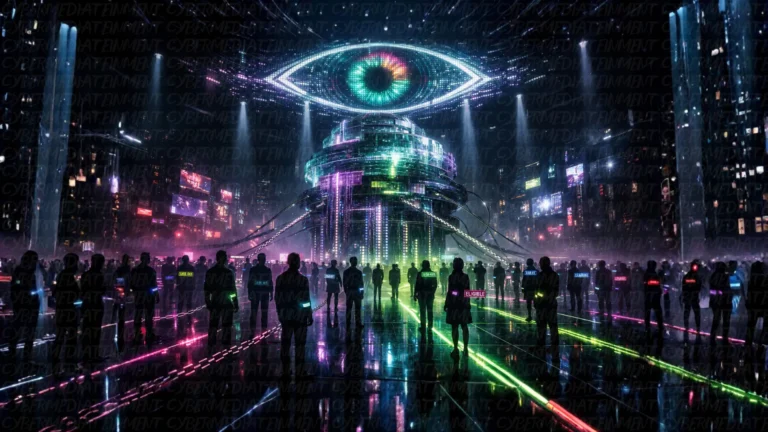
Platform algorithms represent a new kind of digital biopower.
They don’t govern bodies directly. They govern attention, emotion, belief, desire. They operate at the level of what Byung-Chul Han calls “psychopolitics.”
And they do it surgically:
Psychometric profiling: Cambridge Analytica showed that with 300 Facebook likes, a model can predict your personality better than your spouse.
Emotional contagion: Facebook demonstrated (controversial 2014 experiment) that by manipulating newsfeeds it can induce specific emotional states at scale.
Algorithmic nudging: YouTube “recommends” the next video to maximize watch time, gradually reshaping your viewing patterns and beliefs.
This isn’t explicit coercion. It’s governance through environmental modulation. Foucault called this “governmentality”: power that structures the field of possible action so that you “freely” choose what it wants.
The most disturbing part: this algorithmic biopower operates entirely outside democratic control.
No one voted for these algorithms. No parliament meaningfully audits them. No constitution constrains them. They are private property, optimized for extraction.
And yet they determine:
- What millions of people see (and therefore what they know)
- What they believe (through content selection)
- How they feel (through emotional engineering)
- How they vote (through targeted messaging)
We are not just watching an industry crisis. We’re watching the dismantling of the epistemic infrastructure that made modern democracy possible.
TRUTH AND DEMOCRACY: PARRESIA IN THE PLATFORM AGE
Colombo revives one of Foucault’s most powerful concepts: parrhesia — frank speech, truth-telling. In ancient Greece, parrhesia meant speaking truth even when it carried personal risk, even when it challenged power, even when it disturbed social comfort.
Foucault identifies a core paradox: democracy and truth both require and endanger each other.
There is no truth-telling without democracy: only in a free society can you speak truth without immediate repression. Only where plural voices exist can truth emerge through critical confrontation.
But truth-telling destabilizes democracy: when someone speaks uncomfortable truth — truth that contradicts the majority — tension rises. Democracy may react by silencing that voice. Isegoria (everyone’s right to speak) can decay into a “dictatorship of opinion,” where every voice is treated as equally valid regardless of expertise, verification, or connection to reality.
There is no democracy without truth-telling: a democracy without access to verified reality cannot make rational decisions. It becomes manipulable, unstable, incapable of self-correction.
But democracy threatens truth-telling: when opinion dominates, when populism rewards those who say what people want to hear rather than what is true, parrhesia becomes politically suicidal.
Colombo applies this to our platform ecosystem, and the diagnosis is brutal.
In the age of platforms:
- Parrhesia has been replaced by identity performance. You don’t speak truth — you perform tribal loyalty.
- Isegoria mutates into “epistemic anarchy.” Everyone has a voice, but no one has recognized epistemic authority. A virologist and an anti-vax influencer get the same visibility if the influencer drives more engagement.
- Deliberative democracy — citizens debating shared facts — becomes impossible when each tribe lives in a separate algorithmic bubble with alternative facts.
Colombo isolates three perverse dynamics:
1. Technocracy as escape from politics
Facing epistemic chaos, there’s a growing temptation: “Let the experts decide.” “Science says…” “The data show…”
That’s a betrayal of democracy. Technocracy erases politics — the need to choose between conflicting values, to balance legitimate but incompatible interests, to decide collectively how we want to live.
Experts can tell us the likely consequences of each choice. They cannot tell us which choice is morally, politically right.
COVID made this visible: experts disagreed, data were ambiguous, societies had to balance public health with individual freedom, economics with biosecurity. There was no single “scientific answer.” There were political choices to be made democratically.
But when the public sphere is polluted by fake news, conspiracy cascades, and weaponized polarization — how can democratic deliberation function?
2. Populism as anti-parrhesia
Populism promises “truth against the elites.” “I tell it like it is.” “Common sense versus the experts.”
This is the opposite of parrhesia. Parrhesia involves personal risk to speak uncomfortable truth. Populism involves zero risk: it flatters the majority, amplifies resentment, confirms prejudice.
The populist is not “speaking truth to power.” He is feeding back to “the people” what they already want. And calls that “authenticity.”
In an algorithmic system, populism is structurally rewarded. Content that confirms existing beliefs gets more engagement. Content that simplifies complexity circulates better. Content that polarizes creates more interaction.
3. Individualism as disintegration of the political
Contemporary individualism — amplified by platform rhetoric (“express yourself,” “your truth matters,” “your voice counts”) — dissolves the political into a cacophony of personal truths.
There is no longer “the truth.” Only “my truth.” No longer “the common good.” Only “my right to choose.” No longer “we.” Only “I.”
Byung-Chul Han calls this “the atomization of the performance society.” Everyone is an entrepreneur of the self, in permanent competition, with no solidarity.
But democracy requires “we.” It requires seeing the other not as an enemy or competitor but as a co-citizen with whom we build a common world. It requires the willingness to occasionally sacrifice personal interest for collective stability.
Algorithmic bubbles make this structurally impossible. We no longer see “the other.” We only see our tribe and hostile tribes.
We have to start recognizing that informational pollution is not an individual problem (“I know how to spot fake news”) but a collective problem that requires public action. Just like we don’t accept industrial poisoning of rivers and air, we should not accept platforms poisoning the infosphere.
THE FINAL PARADOX: WHEN THE MEGAPHONE BEATS THE CREDENTIAL
Castells called it “network power”: in the network society, power doesn’t live in nodes (individuals, institutions) but in the connections and protocols that govern information flows. Whoever controls the algorithms that determine visibility controls which versions of reality circulate.
In an attention economy governed by surveillance capitalism, institutional credentials matter less than algorithmic megaphones.
A 5,000-word Times investigation read by 100,000 people has less real-world impact than an anonymous viral X thread seen by 50 million.
And when reach is determined by proprietary algorithms optimized for engagement, not accuracy, traditional journalism — slow, expensive, verified — is structurally disadvantaged.
Zuboff again: “The instrumental power of surveillance capitalism is not satisfied with knowing what we will do. It aims to determine what we will do.” Algorithms don’t reflect our informational preferences. They construct them. They train us, progressively, to consume content that yields more behavioral surplus.
The question is no longer: is it true?
The question is: how many people will see it?
And that question is controlled by proprietary systems that neither journalists, nor citizens, nor regulators truly understand — or control.
This is the total failure of Silverstone’s mediapolis. The mediapolis — a shared space where cultures negotiate meaning — has been replaced by what we could now call the “algorithm-polis”: a shattered environment of bubbles, governed by opaque optimization logics, built for extraction, structurally hostile to rational democratic discourse.
THE PERFORMANCE SOCIETY AND IDENTITY CONSUMPTION
Byung-Chul Han describes the shift from Foucault’s “disciplinary society” to the “performance society.” For Foucault, disciplinary society functioned through institutions that imposed norms from the outside. Power said: “You must.”
Han argues that in contemporary society, power works differently. It no longer says “you must.” It says: “you can.” Unlimited freedom. Self-realization. Optimization. The performance society demands you become an entrepreneur of yourself.
But that freedom is a more elegant trap. Exploitation no longer comes from outside — it’s internalized. You exploit yourself, voluntarily, in an endless loop of optimization and output.
How does this connect to journalism and information?
In the performance society, even information consumption becomes performance. You don’t read to understand. You read to signal. To perform identity. To optimize your cultural capital.
- You share a New York Times piece on LinkedIn: performance of professional competence.
- You repost a viral X thread: performance of tribal alignment.
- You binge geopolitics explainers on YouTube: performance of being an “informed citizen.”
- You scroll TikTok: performance of generational belonging.
Information is no longer a path to knowledge. It’s a prop in identity construction.
And in that context, accuracy becomes irrelevant. What matters is: does this content let me perform the identity I want to project?
Han writes: “The performance society produces burnout and depression.” The same applies to informational life. The constant overload, the demand to have instant takes on everything, to perform awareness on all crises, to react in real time to every breaking headline — that is not freedom. It’s exhaustion.
Slow, reflective, verified journalism required time. Pauses. Critical distance. That rhythm is incompatible with the performance society. And that is why it’s dying.
This connects directly to Postman’s critique: when information becomes entertainment (Postman), and simultaneously becomes identity performance (Han), and is extracted as behavioral surplus (Zuboff), and circulates through opaque algorithmic infrastructures (Castells), and loses field autonomy (Bourdieu), and can no longer sustain proper distance (Silverstone), the result is inevitable.
Journalism as we knew it cannot survive in this environment.
LIVING IN THE ECLIPSE
We’re back where we started. Your reality is a bubble.
But now you see the depth of the problem. This isn’t just a crisis of journalism. It’s an epistemic crisis. A crisis of the mediapolis. A crisis of cultural autonomy. A crisis of the very possibility of a shared public sphere.
Neil Postman warned us: when information becomes entertainment, we lose the basic capacity for public reasoning. And without that, democracy is impossible.
Pierre Bourdieu warned us: when fields lose autonomy — when economic logic subordinates all other values — culture becomes merchandise. And when information becomes engagement-optimized merchandise, truth becomes irrelevant.
Manuel Castells warned us: in the network society, power resides in the protocols that govern the flows. Whoever controls communication infrastructure controls what can be said, thought, imagined. And that infrastructure is now private property.
Shoshana Zuboff warned us: surveillance capitalism doesn’t just extract data. It aims to modify behavior. It is building behavior-modification infrastructure at planetary scale, fully outside democratic control.
Michel Foucault prepared us: modern power doesn’t repress. It governs by shaping the environment, managing what is possible, regulating populations. Algorithms are the latest evolution of this biopower — invisible, pervasive, operating at the level of the psyche itself.
Byung-Chul Han completed the picture: in the performance society, even resistance becomes performance. Critique becomes commodity. Information becomes identity labor. The result is exhaustion, not liberation.
Parrhesia — truth-telling that carries risk and founds democracy — is now structurally impossible. Not because courageous people don’t exist, but because the algorithmic environment systematically rewards the opposite: tribal confirmation, populist simplification, identity performance.
Jill Abramson, witnessing the collapse from inside, didn’t just document the end of an industry. She documented the end of a social contract. 20th-century journalism embodied a pact: there are verifiable facts, there is a shared reality, and there is the possibility of rational debate grounded in evidence.
That pact is broken.
Not because people stopped wanting truth. But because the structures that made truth collectively knowable have been dismantled, fragmented, or subordinated to logics that have nothing to do with truth.
Influencer-journalists did not “kill journalism.” They simply occupied the vacuum left by its collapse — and filled it with performative authenticity, invisible mediation, and algorithmically optimized content where engagement beats verification.
Fake news and deepfakes did not create the epistemic crisis. They simply exposed what was already true: in an environment where form can be perfectly replicated without content, where appearance is indistinguishable from reality, verification becomes impossible.
Surveillance capitalism did not corrupt information. It revealed that in an economy where attention is scarce and behavior is the product, accurate information is structurally disadvantaged against engaging information.
The question is not whether we can “save” traditional journalism. We cannot. Not in an era of algorithmic bubbles, surveillance capitalism, the performance society, and digitized biopower.
The question is: can we build something new that still performs what journalism once did?
Create shared spaces of truth. Keep power under pressure. Provide verified information that enables democratic decision-making. Maintain that “proper distance” that Silverstone saw as necessary for civilization.
The honest answer: we don’t know. And maybe not.
The structural forces that destroyed traditional journalism are not slowing down. AI-generated content makes falsity cheaper and faster. Algorithms become more sophisticated at behavioral extraction and modulation. Bubbles harden. Polarization intensifies, even as we get more fragmented and more identical.
We live in parallel realities, consuming information optimized to confirm what we already believe, connected only through culture wars, without any remaining shared arena for negotiating common meaning.
Maybe this is simply the price of the network society. Maybe fragmentation is inevitable. Maybe the very idea of a unified public sphere was a historical anomaly — possible only in that short window when mass media were centralized and the digital fracturing hadn’t yet occurred.
Maybe Silverstone’s mediapolis was an illusion. Maybe “rational public discourse” was always a myth. Maybe field autonomy was always fragile. Maybe “objective journalism” was always an ideological performance disguised as neutrality.
But even if all of that is true, one thing remains: the illusion worked. The fiction held society together. The construct enabled debate. That fragile autonomy sustained democracy.
And now we don’t even have the fiction.
Every morning you open the screen. The algorithm serves you the world.
Your world.
Not the real one.
And every day, that world gets a little more closed. A little more tribal. A little more hostile to whatever contradicts it. A little more optimized to keep you engaged, reshape you, extract value from your attention.
We now have algorithms that don’t pretend to seek truth. That don’t pretend to serve the public. That operate on one criterion: value extraction.
And in the world built by those algorithms, truth is no longer what’s verified. Truth is what circulates. What engages. What keeps you on-platform one minute longer.
This is the eclipse of the real.
We don’t know when — or if — the light comes back.
Based on:
Jill Abramson’s Merchants of Truth, integrated with Roger Silverstone (Why Study the Media?), Neil Postman (Amusing Ourselves to Death), Pierre Bourdieu (field theory and symbolic capital), Manuel Castells (Communication Power, The Rise of the Network Society), Shoshana Zuboff (The Age of Surveillance Capitalism), Michel Foucault (biopower and governmentality), Byung-Chul Han (Psychopolitics, The Burnout Society), and Fausto Colombo (Truth and Democracy. In the Footsteps of Michel Foucault, Media Ecology. Manifesto for a Gentle Communication, The Post-Intermediation of Truth).
SOURCES & REFERENCES
- Jill Abramson – Merchants of Truth: The Business of News and the Fight for Facts (2019)
- Roger Silverstone – Why Study the Media? (1999)
- Neil Postman – Amusing Ourselves to Death: Public Discourse in the Age of Show Business (1985)
- Pierre Bourdieu – Field theory and symbolic capital
- Manuel Castells – Communication Power (2009)
- Manuel Castells – The Rise of the Network Society (1996)
- Shoshana Zuboff – The Age of Surveillance Capitalism: The Fight for a Human Future at the New Frontier of Power (2019)
- Michel Foucault – Biopower and governmentality
- Byung-Chul Han – Psychopolitics: Neoliberalism and New Technologies of Power (2017)
- Byung-Chul Han – The Burnout Society (2015)
- Fausto Colombo – Truth and Democracy. In the Footsteps of Michel Foucault (2022)
- Fausto Colombo – Media Ecology. Manifesto for a Gentle Communication (2020)
- Fausto Colombo, Simone Tosoni, Maria Francesca Murru – The Post-Intermediation of Truth: Newsmaking from Media Companies to Platform (2017)