

REGIME CHANGE IN THE AGE OF ALGORITHMS
Information infrastructure as a geopolitical weapon: from radio to social platforms
By FTA Editorial Staff | followthealgorithm.org
Geopolitical history of information: the permanent conflict
The power of the geopolitics of information. Information infrastructure has never been neutral.
“Information infrastructure” means: technologies, institutions, practices, and architectures that mediate the production, distribution, and reception of information in the public sphere. In 1942 it was shortwave broadcasting; between the 1950s and 1960s it expanded through television and satellites; in the 1990s the Internet arrived; from 2004 onward, the era of algorithmic social platforms transforms control: no longer frontal censorship or declared propaganda, but selective amplification, microtargeting, echo chambers, filter bubbles.

The critical question is not whether social media “caused” the Arab Spring or color revolutions. The question is: how the technological evolution of information infrastructure has modified the operational strategies of regime change, while keeping its geopolitical function invariant. Looking beyond the technical surface means recognizing structural continuities: patterns that repeat, with rising efficiency and falling costs.
Three essential concepts to understand the geopolitics of information
- Cultural hegemony (Gramsci): power is exercised as consent, through cultural institutions and the normalization of social order.
- Manufacturing consent (Herman & Chomsky): mainstream media filter reality through ownership structures, advertising, official sources, and ideological discipline.
- Infrastructure as power: whoever controls channels, platforms, standards, and informational logistics controls the very conditions of public perception.
The thesis: digital information warfare is a third generation of information warfare. Each technological transition increases: (1) targeting granularity, (2) diffusion speed, (3) plausible deniability, (4) economic efficiency per unit of impact.
ARCHAEOLOGY of the geopolitics of information: 1942–2000
Genesis: Voice of America and the institutionalization of psychological warfare
The modern history of information warfare as a deliberate instrument of foreign policy begins in 1942 with the first broadcasts of Voice of America. The rhetoric of “truth” becomes an operational brand: truth as a weapon, not as neutrality. Behind the facade, the operation is from the start a strategic device: propaganda, psychological warfare, ground preparation.
“Truth” is not outside information warfare: it is its most useful material, when it is selected, framed, timed, repeated.
The point is not to moralize about propaganda: it is to understand that information infrastructure is built and managed as a permanent component of geopolitical strategy—and that it can become unstable and self-contradictory when editorial integrity is subordinated to the alliance of the moment.
Cold War: Radio Free Europe and the “surrogate press” ecosystem
Voice of America, as an official voice, has structural limits: everything it says is immediately attributable to the state. A parallel infrastructure is needed with greater rhetorical and operational flexibility: Radio Free Europe and Radio Liberty. The advantage is not only “aggressiveness”: it is the ability to operate as a surrogate free press for societies where the press is controlled.
Shortwave is the medium: it crosses borders, forces regimes into jamming, creates a war of frequencies. But a limit remains: a one-way medium can sow dissent, but it cannot organize. That leap will occur only with bidirectional digital infrastructure.
The Campaign of Truth: truth as cultural soft power
In the 1950s, public diplomacy is institutionalized as a “campaign”: not information, but a coordinated operation. Broadcasting + cultural penetration: music, literature, cinema as hegemonic vectors. The public remains “audience”: it receives, it does not coordinate.
The 1942–2000 model can be summarized as: informational broadcasting + cultural penetration, with a structurally passive public. It is the technical and political prelude to the transition: when communication becomes a network, dissent can become logistics.
THE DIGITAL ERA: ALGORITHMS AS SOFT POWER (Geopolitics of information)
The great transition: from broadcasting to networking
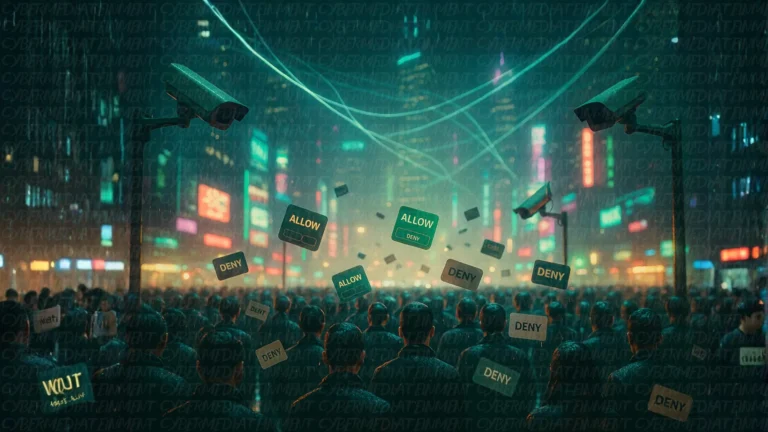
Between 1990 and 2010 the paradigm shifts: first “broadcasting with new technology” (websites, mailing lists), then social platforms: many-to-many infrastructures, viral amplification, spontaneous communities. It is not a new channel: it is a new architecture. Control no longer passes only through censorship or declared propaganda, but through the invisible orchestration of visibility.
Five structural dimensions of platforms
- Peer-to-peer organization: users become nodes, not just an audience.
- Selective algorithmic amplification: what appears in the feed is an opaque computational decision.
- Microtargeting: different messages to different groups, based on granular profiling.
- Feedback loops: the algorithm “learns” and reinforces what produces reaction, polarizing and radicalizing.
- Plausible deniability: external intervention is harder to prove, because it appears organic.

The National Endowment for Democracy: the “private” governance of influence
To understand the integration of digital infrastructure into regime-change strategies, the role of funding architectures must be examined. The NED operates as a redistribution device: funding to local NGOs, training, “independent” media, election monitoring, civic participation. The point is not to deny that genuine democratic demands can exist; the point is that when the ecosystem is donor-driven, civil society becomes a logistical chain of external priorities.
Orange Revolution and Euromaidan: integration of digital, training, and money
Ukraine 2004 shows the perfect convergence: funds, methods (Gene Sharp, training, nonviolent activism as an operational manual), and digital infrastructure (SMS, rapid coordination, narratives, “proof” images). Diplomatic intervention provides international legitimation. The next cycle (2013–2014) radicalizes: polarization, escalation, institutional collapse, prolonged war.
When genuine protest is weaponized inside an amplification infrastructure, the question is not “authenticity”: it is who controls the trajectory of outcomes.
Authoritarian learning: the toolkit against the power of the geopolitics of information
The “cheap regime change via NGOs + social media” paradigm hits its limit: regimes learn. “Foreign agent” laws, selective blocking, data localization, domestic platforms, firewalls, surveillance. The global “flat” Internet fractures into spheres. The result is not automatic liberation: it is balkanization and the militarization of connectivity.
The structural point: whoever controls physical infrastructures (cables, data centers, backbone) and platforms (feed, ads, ranking) controls the conditions and possibilities of public discourse. Digital sovereignty becomes a security doctrine.
GEOPOLITICS OF INFORMATION: CASE STUDIES
LIBYA 2011: prototype of digital regime change + military escalation
Libya is the case where “protection of civilians” slides into an opportunistic policy of regime change. The digital layer accelerates the narrative, but the outcome is determined by force: no-fly zone → air campaigns → institutional collapse. The consequences are not democratic transition, but fragmentation, militias, humanitarian crises, and the export of regional instability.
The long-term material output is consistent with a pattern: subordinated integration into the global market, renegotiation of access to resources in a context of state failure. “Reconstruction” turns into a war economy.
BOLIVIA 2019: manufacturing fraud via statistical analysis and multilateral legitimation
Bolivia 2019 shows a more technically sophisticated regime change: not (only) the street and social media, but audits and an “authority” that certifies a narrative. The OAS declares a “trend change” as hard-to-explain and turns it into systemic loss of trust. In the subsequent cycle, independent analyses challenge the methodological solidity and show how the timing of the count (rural/urban) explains apparently anomalous patterns. The structural point is this: when a body perceived as neutral produces a diagnosis, that diagnosis becomes a weapon.
In the informational regime, you don’t need to control every vote: you just need to control the frame through which the vote is read.
VENEZUELA: economic strangulation, selective exemptions, escalation
Venezuela condenses 21st-century regime change: sanctions, parallel recognition, coup attempts, diplomatic pressure, and—when the “soft” model isn’t enough—escalation. Here the material dimension is explicit: control of resources, selective exemptions for “authorized” operators, and sector recomposition along externally favorable logics.

Geopolitics of information: toward a materialist critique of digital infrastructure
Information infrastructure is not neutral: it is an apparatus of hegemony. Technology does not determine outcomes, but it enables strategies. Platforms do not “host” discourse: they curate it, push it, compress it, reward it, make it monetizable. Algorithms do not reflect preferences: they shape them.
The invariant pattern (1942–today) is recognizable: target identification, narrative preparation, crisis/trigger, intervention (soft or hard), post-event consolidation through economic reshuffles and geopolitical constraints. The means change—radio, TV, web, social, ads—but the function is the same: manufacturing consent with ever more granular and ever less visible tools.
Three traps to avoid
- Technological determinism: it’s not “social media” that makes a revolution; it’s actors and interests using it as infrastructure.
- False neutrality: engagement optimization is a structural bias toward polarization and high-reactivity content.
- Conspiracy thinking: often it’s enough to follow incentives, ownership, funding, and the information supply chain.
Effective critique is materialist: who owns the platform? who funds the ecosystem? who controls backbone and data? who monetizes attention? Following money and infrastructure remains the most reliable method.
Decode. Resist. Reclaim.
Continue reading
If you want to go beyond the surface—and read infrastructure as a field of resistance—here’s a deep dive aligned with this framework.
Read more