
The #Hashtag War
HASHTAG FOLLOW THE ALGORITIM: how they’re taking away, one swipe at a time, our freedom of choice.
Yet another video by Dario Amodei has dropped.
For those who work with systems, it looks like manna. Everyone hanging on his every word—just to hear empty phrases, excellently articulated, that say and explain nothing. It’s always like that.
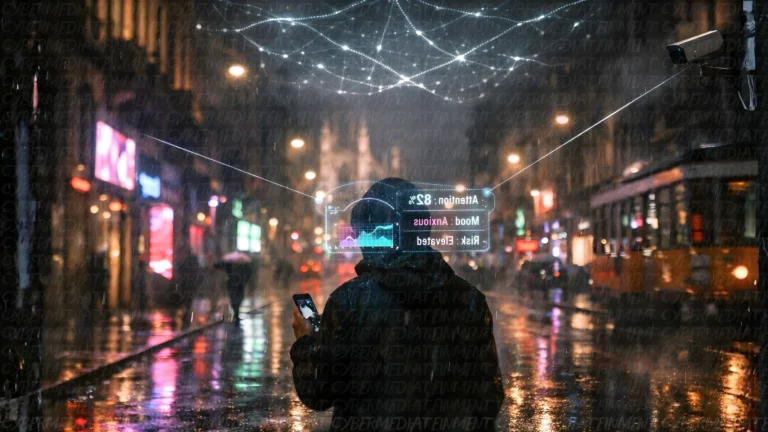
And today, at least three years after the first announcement about reducing the weight of hashtags in the algorithmic distribution of content… along comes Instagram again. Along comes Meta. Along come Socials, the Media… in short, the power of the network—Manuel Castell’s Network gatekeeping power,
Here comes Dario Amodei, once again, to tell us that hashtags don’t matter.
It wasn’t enough to turn a photo-album social network—where we’d taken refuge to swap pictures with friends after Facebook’s clumsy and endless transformation—first into a News Feed and a space for deep dives (always at the service of Big Media, of course), then into a marketplace.
Apparently even the affiliate program, blue checkmarks for verified users, and in-app ads weren’t enough… Apparently the gold mine of information that we are—our interactions, habits, social clusters of belonging, not to mention purchasing power—doesn’t yield enough…
The truth is something else: we don’t matter.
Our interaction choices, our active paths, our ability to search for what interests us: none of this counts anymore. In fact, they’ve been working for years to make it less and less relevant—and today they’re doubling down.
Against Hashtag = against active gesture
Let’s be clear: beyond algorithmic criteria, hashtags—as they were born—were meant to move an active user through content. They let us filter, search, and follow topics we cared about, free from platform logic, from pushed trends, and from sneaky “suggested for you.”
Hence the war on hashtags. A silent yet brutal war. Yet another war on our digital autonomy.
From 2021 the first offensive begins: reduced visibility tied to hashtags, penalties for using them “the wrong way,” and the removal of key functions—like following tags.
In 2022 the second surgical move arrives: Instagram removes the “Recent” tab from hashtag pages, leaving only “Top” and “Reels.” The living timeline disappears; the shop window remains. The illusion of choice.
Then, the heaviest blow: the end of being able to follow hashtags. The end of their visibility in the feed. The end of their social function. The message is clear: less active exploration, more “for you” feed. The official narrative? “We’re doing it to fight spam and abuse.” The reality? Less user autonomy, more power to the system.
The Hashtag storytelling
In parallel, the brainwashing arrives. Buffer, March 27, 2025:
“It’s official: hashtags don’t help reach. Instagram has reduced their weight to limit spam; since December 2024 you can no longer follow hashtags and those you followed no longer appear in the feed.”
Manuals, tutorials, videos, sponsored posts: all aligned to repeat the new dogma. Hashtags are useless. Worse: harmful. They ruin reach. They make content look dated. They’re spam. All delivered with a paternalistic tone: “we’re helping you create better.”
Translation: we’re helping you create the way we want.
Dystopian Vision

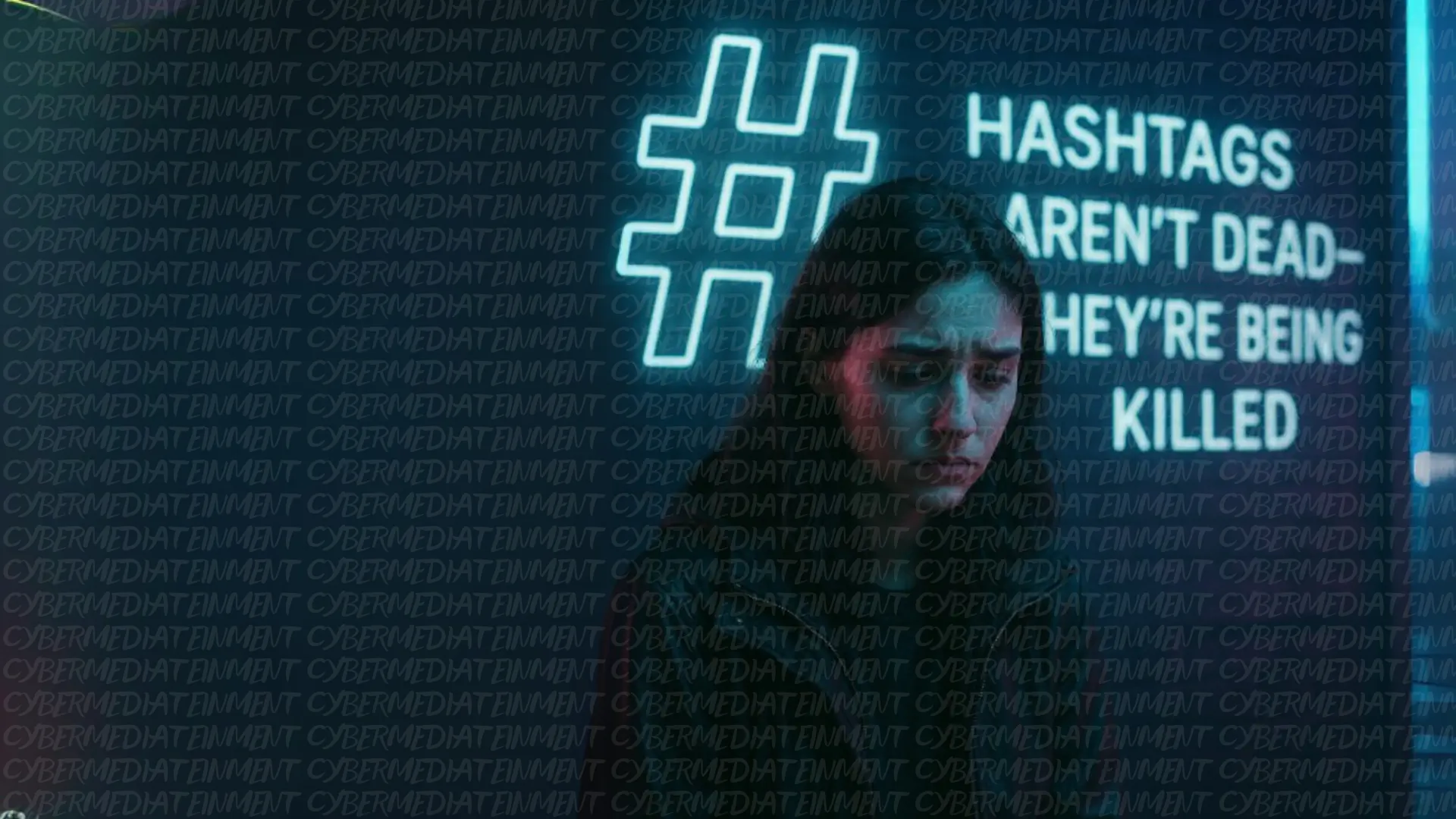
In a neon-drenched future, she stands alone — a symbol of lost identity: Social conformism and emotional isolation in our synthetic world.
The planned decline of hashtag: less visibility, more suspicion
In creators’ day-to-day, a “sense of irritation” settles in. A creeping doubt. Hashtag = penalty. Reach collapsing. Engagement falling. And the correlation seems ever clearer.
Remove “Recent,” remove “Follow hashtag,” make their weight in distribution irrelevant. The result? Users stop using them. Creators self-censor. The platform wins.
So then: why do they still exist?
Because they still serve a purpose. For them.
Hashtags were never just about reach. They were born to organize information. In 2007, Chris Messina proposed them as an open, democratic system to categorize content on Twitter. In 2011, Instagram turned them into the heart of internal search: #fashion, #travel, #motorcycles, #technology. Living communities, free exploration.
Then? Slow euthanasia.
Today, hashtags still work… but only for the platform.
They help catalog you. Track your interests. Profile you better for advertising. But they no longer bring visibility. They don’t help you discover content. They don’t reward you.
Worse: they tell you you’re old if you use them.
HASHTAG’s datas analysis doesn’t agree
The official narrative (“hashtags are useless”) clashes with what the data say. A study published in 2025 shows that:
- thematic and informative hashtags still increase organic reach;
- noisy or bait tags (#viral, #like4like) are penalized;
- placement and quantity matter (max 3–5, in the caption).
And then there’s the academic literature:
Chakrabarti et al., 2023: contextual hashtags = higher engagement.
Research on PMC, ScienceDirect, ResearchGate: hashtags organize knowledge; they’re semantic archives.
Nano-influencers who use relevant tags perform better than those who rely on generic or self-referential ones.
From discovery engine to passive feed
What we’re seeing is a paradigm shift.
Hashtags enabled active search. Independent exploration. A system where you choose.
Today, everything gets reabsorbed into the “for you” feed—a closed, predictive feed, optimized to keep you hooked, not to help you discover.
It’s the shift from an explorable network to a platform-centric one. Where you don’t decide what to see—it’s curated, suggested, administered to you.
And the active gesture becomes dangerous. For them.
The paradox: “it’s useless” only for you
Here’s the point: they tell you hashtags don’t work because they do. Not for you. For them.
The usefulness of hashtags to Meta has never changed. They still serve to:
- track conversations;
- identify emerging trends;
- feed recommendation systems.
But for the average user? Penalties. Disappearances from the feed. Shadowbans. They convince you they “don’t work,” so you stop using them. And they can maintain control without opposition.
It’s psychological warfare.
This is an autonomy issue (not hashtags)
Hashtags aren’t just a reach tool. They’re a form of freedom.
They let you search, not just scroll. Discover, not just endure. Follow an idea, not a profile. Step out of the bubble and find content that speaks to your mind, not just to your profile.
And all of this is disappearing. Methodically. Calmly. But decisively.
And creators? Hashtags: Trapped
If you make content, you know it: every day you’re torn between what works for the algorithm and what speaks to the community.
They tell you:
- “Don’t use too many hashtags.”
- “Keywords in the caption are better.”
- “Hashtags ruin the aesthetic.”
- “Think about ranking, not people.”
Meanwhile you lose visibility. You feel inadequate. You self-censor.
That’s how they shape you.
The end of hashtags?
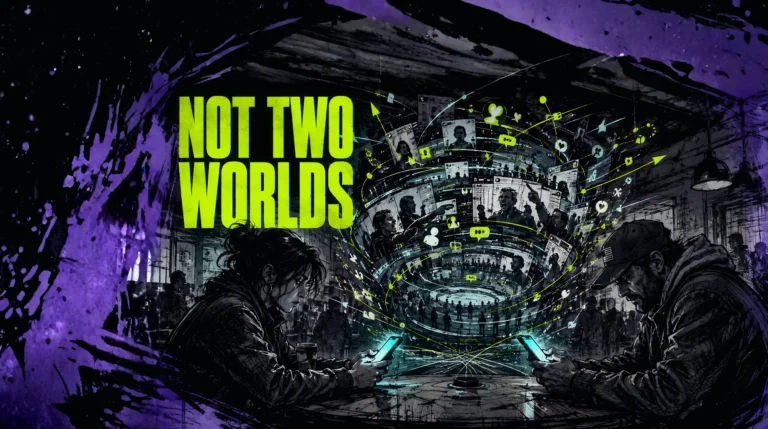
This isn’t just a digital war… This is a cultural—human—war. Between passive feeds and passive humans, and active minds and active search. Between “we’ll show you what you like” and “we’ll let you choose what to look for.” Between automation and awareness.
Hashtags aren’t dead. They’re being killed.
hashtag SOURCES
- Chris Messina (2007) – proposal of hashtags on Twitter
- Wikipedia – Hashtag (history, usage, definition)
- Twitter/X Blog (2017) – “The hashtag at ten years young”
- Web Directions – “Chris Messina and 10 Years of the #hashtag”
- TechCrunch (Apr 19, 2022) – Instagram tests removing the “Recent” tab
- Social Media Today (Nov 17, 2024) – Instagram removes the option to follow hashtags
- AS USA (Apr 20, 2025) – Why you can’t follow hashtags on Instagram anymore
- Hello Social Co. (Nov 22, 2024) – Impact for place-based brands
- Hire A Writer (Nov 25, 2024) – “Instagram discontinuing hashtag following feature”
- Buffer (Mar 27, 2025) – “How the Instagram Algorithm Works: Your 2025 Guide”
- Social Media Today (Dec 18, 2024) – “Do you still need to use hashtags?”
- Ignite Social Media (Apr 23, 2025) – Best practices 2025 (3–5 targeted hashtags)
- Content Marketing Institute (May 21, 2025) – “How to use hashtags now”
- Chakrabarti et al. (2023) – “Hashtag recommendation…” (PMC)
- Chakrabarti et al. (2023) – (PubMed)
- Giannoulakis & Tsapatsoulis (2016) – “Evaluating the descriptive power of Instagram hashtags”
- IJARSCT (2025) – “Instagram Reach Analysis” (PDF)
- BMC Public Health (2025) – Hashtags in health campaigns
- “Instagram Marketing 2025” (Buffer) – updated practices
- Toronto Guardian (Nov 27, 2023) – Effects of the disappearance of the “Recent” tab
- Reddit – community reports about Instagram